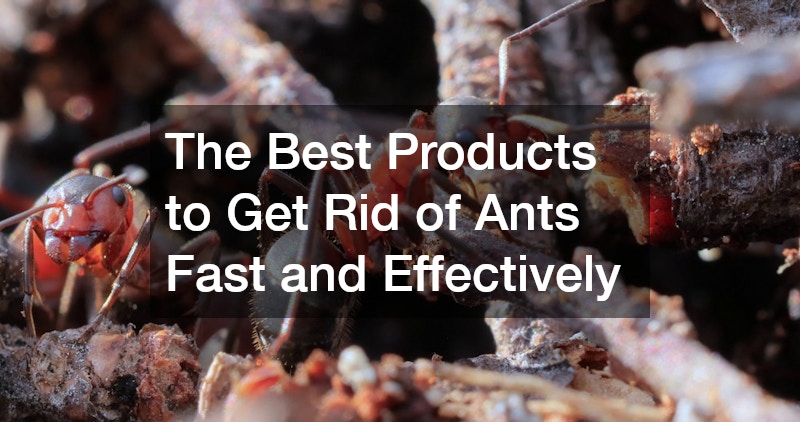
Discover the top products and methods to get rid of ants quickly and effectively. This guide covers essential information for choosing the right solutions to ensure your home remains ant-free.
Organic ant repellents are growing in popularity due to their non-toxic nature and environmental friendliness. Many homeowners prefer these because they are safe to use around children and pets, offering peace of mind.
Video Source
Common natural solutions include essential oils like peppermint and tea tree oil, which have demonstrated efficacy in repelling ants. Another popular choice is diatomaceous earth, a natural powder that disrupts the exoskeletons of ants.
Some users also create homemade mixtures using household ingredients such as vinegar, which disrupts ant scent trails. Despite being safer alternatives, it's crucial to reapply these natural remedies frequently for continued effectiveness.
Chemical ant killers are often considered the most effective option for rapidly dealing with infestations. Products like ant sprays and granules provide fast-acting solutions by either directly contacting the pest or creating a barrier.
These products often contain active ingredients such as bifenthrin or fipronil, which eliminate ants by targeting their nervous systems. Chemical treatments are particularly advantageous in severe infestations where natural solutions alone are insufficient.
However, it's essential to follow safety instructions carefully when using chemical products, as they can pose risks to humans and pets. Choosing the right chemical based on the type and severity of infestation will help achieve optimal results.
The success of ant baits depends significantly on selecting products that attract the specific ant species present in your home. Identifying the type of ant is a crucial initial step, as different species are drawn to different baits.
Protein, sugar, and oil-based baits are available, catering to the preferences of various ants like carpenter ants or sugar ants. Manufacturers often provide guidelines to assist homeowners in choosing an appropriate bait for their situation.
Choosing the right ant bait is critical because ants carry the bait back to their colony, effectively eradicating the entire population over time. Consistent monitoring and adjustment of baits can lead to more successful outcomes.
Proper placement of ant baits is just as important as choosing the right product. Place baits near ant trails and entry points to maximize exposure and attract foraging ants quickly.
Avoid areas with heavy foot traffic where baits might be disrupted or inaccessible to ants. Generally, it’s recommended to place baits in hidden locations like under sinks, behind appliances, or in corners of rooms.
Replenish and move baits as necessary until the infestation is resolved. Rotating baits can also prevent ants from becoming acclimated to a single type, maintaining a consistent level of effectiveness.
DIY ant control methods offer the advantage of being cost-effective and customizable using readily available household materials. Examples include the use of borax mixed with sugar to create homemade baits.
However, DIY methods may not always match the effectiveness of commercial products, especially in severe infestations. There is a risk that improper application or concentration may result in incomplete elimination of the colony.
For those seeking more natural remedies, DIY methods remain appealing, but users should be prepared for a potentially longer time before significant results are observed. Evaluating the scope of the infestation can guide whether DIY approaches are sufficient.
Commercial products, while often more initially expensive than DIY solutions, frequently offer quicker and more reliable results. The ingredients and formulations in these products are scientifically designed to target ants efficiently.
Conversely, DIY solutions, although cheaper, may involve trial and error and multiple applications before seeing desired results. This can become costly over time in terms of both resources and time spent.
Determining the best strategy involves weighing the immediacy of need against budget constraints and desired environmental impact. A combination approach might strike the best balance between effective ant control and cost management.
Maintaining an ant-free home involves considering both natural and chemical options and making informed decisions about products and methods used. Effectively using baits and understanding the nuances between DIY and commercial options will lead to lasting results.
Identifying ant species, strategically placing baits, and weighing costs vs. outcomes are pivotal to effective ant control. By balancing safety, efficacy, and efficiency, homeowners can keep their living spaces clean and free from the nuisance of ants.