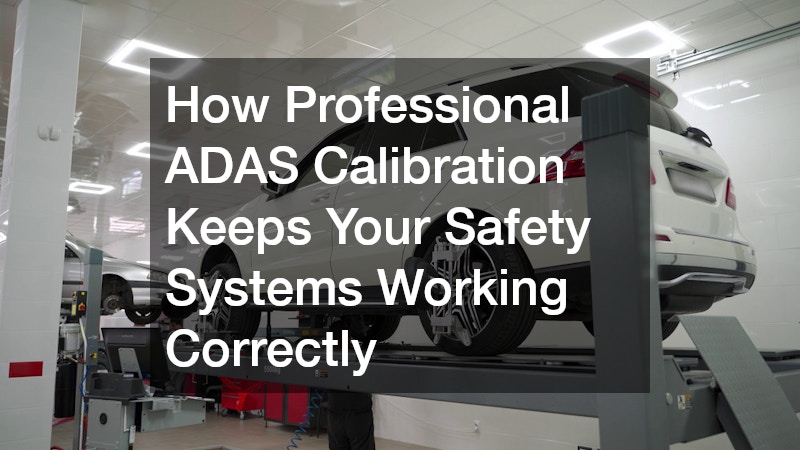
Advanced Driver Assistance Systems (ADAS) have revolutionized vehicular safety by incorporating technology to aid in accident prevention and driving precision. These systems, relying on sensors and cameras, offer functionalities such as lane-keeping assistance, adaptive cruise control, and automatic emergency braking. However, to maintain their effectiveness and accuracy, professional calibration is of utmost importance. Without proper calibration, even the most sophisticated systems can falter, leading to potential safety hazards. Hence, regular and comprehensive ADAS calibration is essential for ensuring that these systems continue to enhance vehicle performance and safety effectively.
Video Source
ADAS calibration service is a critical component of vehicle safety maintenance, ensuring that the intricate network of sensors, cameras, and systems functions with precision. These systems are finely tuned and can easily be thrown off by minor alterations or changes to the vehicle, such as wheel alignment or windshield replacements. For example, if a sensor within the ADAS is misaligned, even by a small margin, it could result in the system misinterpreting distances or misidentifying objects, risking potential accidents. In addition, the software updates and hardware upgrades that modern vehicles undergo can affect ADAS functionality, emphasizing the need for regular recalibration. Therefore, consistent calibration ensures the synchronization of all parts of the ADAS, enhancing reliability and vehicle safety.
Furthermore, professional ADAS calibration services are not only a safety measure but a legal requirement in many jurisdictions. The implementation of various safety regulations and standards mandates that vehicles with ADAS capabilities comply with strict accuracy and reliability levels. Professional calibration involves the use of specialized equipment and trained technicians who ensure that the vehicles meet these regulations. By adhering to laws and maintaining regular calibration schedules, drivers contribute to safer road environments while ensuring that their vehicles’ technology operates within the prescribed legal boundaries. This harmonization protects drivers, passengers, and other road users, highlighting the indispensable role of professional ADAS calibration.
The consequences of neglecting ADAS calibration are significant, as these systems rely on pinpoint accuracy to function effectively. If left uncalibrated, an ADAS can provide inaccurate information to the driver, such as false alerts or no alerts at all, creating confusion and increasing the risk of collisions. For instance, a misaligned camera may fail to detect lane markings accurately, causing the lane-keeping assistance not to activate when needed. Additionally, automatic emergency braking might be delayed or triggered unnecessarily if sensors are not reading distances correctly. Therefore, ensuring that these systems are correctly calibrated is vital for maintaining the vehicle's intended safety features.
Ignoring calibration may also have a financial impact as delayed repairs and unaddressed malfunctions can lead to expensive system overhauls or replacements. Misalignment of sensors often requires a complete recalibration and potentially replacing expensive components if damage has progressed. From a practical perspective, the cost savings of maintaining regular calibration overshadow potential repair costs from neglect. Moreover, maintaining optimal safety standards can help preserve the resale value of a vehicle, as prospective buyers will value a history of well-maintained ADAS systems. Hence, regular calibration is a financially wise investment in vehicle longevity and operational integrity.
Determining the frequency of ADAS calibration involves considering several factors that can impact system accuracy. Generally, it is recommended to recalibrate after any event that may alter the vehicle's original equipment settings, such as an accident, windshield replacement, or a significant purchase like new tires. Regular service intervals provide an ideal opportunity to assess the system’s condition and, if necessary, perform recalibration to ensure continued precision. Following the manufacturer’s guidelines is also crucial, as these are tailored to the specific needs and configurations of each vehicle model. Drivers should adhere to these recommendations to maintain the vehicle's safety features effectively.
In conclusion, professional ADAS calibration is a cornerstone of vehicular safety, ensuring that advanced safety technologies function as intended. By understanding the necessity, potential consequences of neglect, and appropriate frequency of calibration, drivers can better maintain their ADAS systems. Regular and professional calibrations not only uphold the safety and reliability of a vehicle but also comply with legal safety standards. This proactive approach contributes to a safer driving experience for all road users, ultimately enhancing the trust we place in these sophisticated systems. Maintaining regular calibration underscores a commitment to safety, precision, and technological excellence in modern driving.