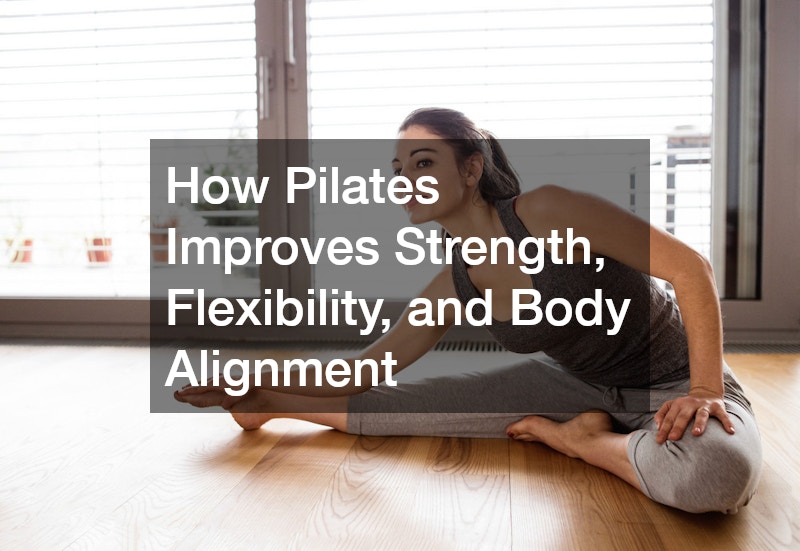
Explore the profound benefits of local pilates studios and how it contributes to enhancing strength, flexibility, and body alignment. This article will delve into common inquiries about Pilates, offering insights into its mechanisms and effects on the human body.
Pilates is renowned for its ability to develop core strength and muscle endurance. By focusing on controlled movements that engage the core, Pilates exercises such as "The Hundred," "Plank," and "Teaser" target deep abdominal muscles and stabilize the spine.
Video Source
This practice not only strengthens the core but also supports the entire body, providing a solid foundation for strength. Moreover, Pilates promotes muscle endurance through repetition and sustained poses, which is crucial for maintaining strength over time. Pilates is a low-impact exercise, making it accessible to individuals of various fitness levels, from beginners to advanced practitioners.
The comprehensive nature of Pilates means it engages various muscle groups simultaneously, offering a full-body workout. For instance, while "Leg Circles" primarily focus on the core, they also engage the hip flexors and lower back muscles. Similarly, "Shoulder Bridge" works the glutes, hamstrings, and lower back, contributing to a balanced muscle development. As a result, individuals who practice Pilates regularly experience not just increased strength but also improved muscle tone and balance, which are crucial for everyday activities. The attention to breathing techniques in Pilates enhances oxygen flow to the muscles, optimizing physical performance and recovery.
Flexibility is a key component of Pilates practice, achieved through a focus on stretching and control. Classical Pilates exercises are designed to lengthen the muscles, promoting greater range of motion. The continuous flow of movements in Pilates prevents tension build-up in muscles and joints, thereby enhancing flexibility. Exercises like "Spine Stretch Forward" and "Saw" target the spine and hamstrings, encouraging full extension and improved flexibility. Consistent practice allows practitioners to progress gradually, reducing stiffness and improving overall muscle elasticity.
The emphasis on proper technique and alignment in Pilates contributes to safe stretching, fostering flexibility without risking injury. By promoting slow and controlled movements, Pilates ensures that muscles are lengthened optimally, avoiding overstretching and damage. This methodical approach is beneficial not only for seasoned athletes but also for individuals seeking gentle ways to improve flexibility. Additionally, the incorporation of breathing techniques aids relaxation, allowing muscles to stretch more effectively. Over time, improved flexibility contributes to better posture, movement efficiency, and a decreased risk of musculoskeletal issues.
Regular Pilates practice enhances joint mobility, which is essential for overall flexibility. By working through a range of motions, Pilates keeps the joints lubricated and reduces stiffness caused by inactivity or poor posture. Increased joint mobility ensures smoother movements and enhances overall physical activity. As flexibility improves, so does the body's ability to perform a broader range of exercises and movements, translating into more dynamic fitness capabilities. Furthermore, increased flexibility can complement other forms of exercise, enhancing overall physical fitness and performance.
Proper body alignment is crucial for injury prevention and overall health, and Pilates greatly contributes to this area. By reinforcing control and posture awareness, Pilates aims to correct misalignments and promote optimal alignment. Exercises such as "Pilates Roll-Up" and "Pilates Roll-Over" aid in achieving spinal alignment, distributing weight evenly and enhancing balance. Improved alignment means reduced strain on muscles and joints, which is fundamental in preventing injuries. Pilates promotes symmetry in muscle development, which is essential for a well-aligned body.
Pilates focuses on core stability, which supports maintaining the natural curvature of the spine, an essential aspect of body alignment. By strengthening the core muscles, Pilates practitioners can maintain good posture, even during daily activities. The focus on breathing and concentration allows for precise control of movements, ensuring that alignment is maintained throughout each exercise. Over time, this awareness translates to improved posture while standing, walking, or sitting, significantly reducing the risk of chronic pain associated with poor posture. Pilates emphasizes quality over quantity, ensuring that exercises are performed mindfully and correctly to further promote proper alignment.
In conclusion, Pilates provides a holistic approach to strength-building, flexibility, and alignment. Practicing Pilates regularly can lead to significant health benefits, making it a valuable addition to any fitness regimen. Through controlled movements and mindful practices, Pilates fosters comprehensive physical well-being, enhancing strength, flexibility, and alignment. As a versatile form of exercise, it accommodates various fitness levels and promotes long-term health benefits. Incorporating Pilates into your routine can lead to noticeable improvements in your physical and mental health.