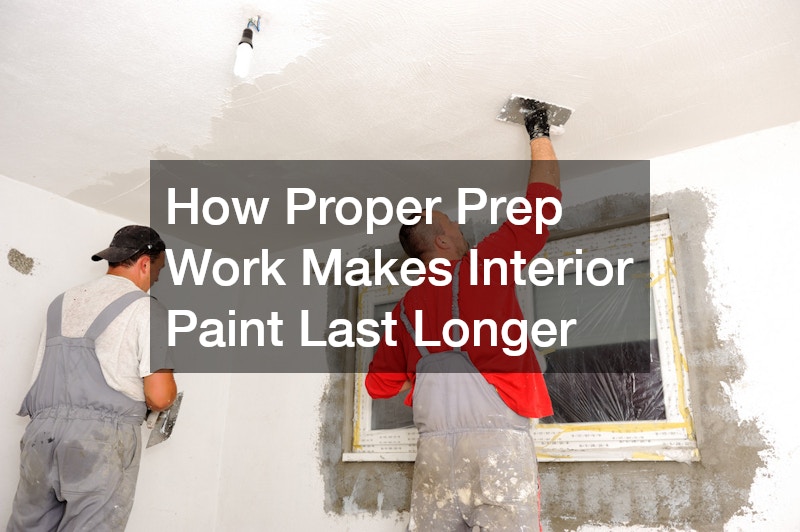
Painting interior walls may seem like a straightforward task, but achieving a long-lasting finish depends far more on preparation than most people realize. Many homeowners and interior painting contractors know that paint durability is not determined by the brand or color alone, but by how well the surface is prepared before application. Proper prep work ensures that paint adheres correctly, spreads evenly, and cures into a strong, durable finish that can withstand daily wear, cleaning, and environmental changes inside the home.
Video Source
Without it, even premium paint can begin to peel, fade, or show imperfections in a short amount of time. Taking the time to prepare surfaces properly is what separates a short-lived paint job from one that maintains its appearance for years.
The first step in any proper prep process is evaluating the condition of the walls. This involves carefully inspecting for cracks, nail holes, dents, scuffs, and uneven textures. These imperfections may seem minor at first, but once paint is applied, they can become more noticeable and affect the overall appearance of the room. Loose or flaking paint must also be removed, as new paint cannot bond to unstable surfaces properly. Sanding is often necessary to smooth rough areas and create a consistent texture that allows paint to adhere evenly. This stage is essential because it creates the foundation for everything that follows. If the surface is not stable and smooth, the paint will struggle to perform correctly over time.
Once the walls have been evaluated, cleaning becomes a critical step. Over time, interior walls collect dust, oils, cooking residue, smoke particles, and other contaminants that can interfere with paint adhesion. If these are not removed, paint may not stick properly and can begin to bubble or peel later. Washing walls with a mild detergent solution helps eliminate these barriers and creates a cleaner surface for painting. Areas like kitchens, bathrooms, and hallways often require extra attention due to higher levels of moisture or traffic.
After cleaning, all necessary repairs should be completed. Holes should be filled with spackle or joint compound, cracks should be sealed, and uneven patches should be smoothed out. Once these materials dry, sanding ensures they blend seamlessly with the surrounding wall. This step is important because patched areas that are not properly sanded can absorb paint differently, resulting in visible spots or uneven color distribution once the paint dries.
Priming is one of the most important steps in ensuring long-lasting interior paint results. A primer acts as a bonding layer between the wall and the paint, helping the finish coat adhere more effectively. It also creates a uniform surface that improves color accuracy and consistency. This is especially important when painting over dark colors, repaired areas, or new drywall.
Without primer, paint can be absorbed unevenly into porous surfaces, leading to patchy or dull-looking results. Primer also helps seal stains, preventing them from bleeding through the final coat. In many cases, it reduces the number of paint coats needed, improving both efficiency and final appearance. When applied correctly, primer significantly improves the durability and lifespan of the entire paint system.
The environment in which painting takes place also plays a major role in how long the finish will last. Temperature, humidity, and airflow all impact how paint dries and cures. If humidity levels are too high, paint may dry slowly and trap moisture beneath the surface, increasing the risk of peeling or bubbling. If conditions are too dry or hot, paint may dry too quickly, preventing proper bonding and leading to cracking or weak adhesion.
Good ventilation helps regulate indoor conditions and ensures that paint dries evenly. Keeping windows open or using fans can help improve airflow, but it is important to avoid extreme drafts that may affect the drying process. Maintaining stable environmental conditions throughout the entire painting process is key to achieving a strong, durable finish.
Ultimately, the durability and appearance of interior paint are determined long before the first coat is applied. A well-prepared surface ensures that paint looks smoother, resists wear better, and maintains its color and quality for years. In the end, preparation is not just a preliminary step but the most important factor in achieving a professional, long-lasting interior paint job.