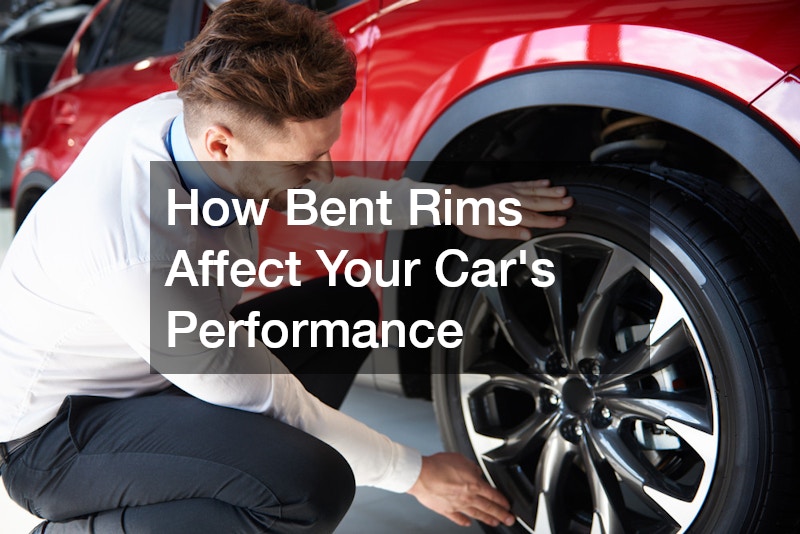
Your wheels play a much bigger role in driving safety and comfort than most people realize. Even a small impact from a pothole, curb, or road debris can bend a rim and create problems that go far beyond appearance. Many drivers don’t notice the issue right away, but over time, a bent rim can affect handling, tire life, and overall vehicle performance. That’s why services like local rim repair are often needed sooner than expected.
Bent rims usually happen when a wheel hits a sharp or sudden impact. Potholes are one of the most common causes, especially on roads that experience heavy traffic or weather damage.
Video Source
Curb impacts during parking or tight turns can also lead to bending.
Even if the damage seems minor, the force from the impact can distort the wheel’s shape slightly. This small change can lead to uneven contact between the tire and the road surface, which creates a chain reaction of performance issues.
One of the earliest and most noticeable signs of a bent rim is vibration. Drivers may feel shaking through the steering wheel or seat, especially at higher speeds.
This happens because the wheel is no longer perfectly round. As it rotates, the uneven shape causes the tire to move up and down slightly, creating an unbalanced ride. Over time, this vibration can become more noticeable and uncomfortable.
Ignoring this symptom can lead to additional wear on suspension components and tires.
A bent rim can cause the tire to make inconsistent contact with the road. Instead of wearing evenly across the tread, certain areas may wear down faster than others.
This uneven wear reduces tire lifespan and can lead to the need for earlier replacement. In some cases, it may also affect traction, especially in wet or slippery conditions.
Drivers often mistake this issue for poor alignment, but a damaged rim can be the underlying cause.
Another common issue caused by bent rims is slow air leakage. When the rim is no longer sealed properly against the tire bead, air can escape gradually.
This leads to frequent low tire pressure warnings and the need to refill tires more often. In some cases, the leak may be slow enough that it goes unnoticed until performance is affected.
Driving on underinflated tires not only reduces fuel efficiency but also increases the risk of tire damage.
A bent rim can negatively impact how a vehicle handles on the road. Since the wheel is no longer perfectly aligned, steering response may feel less precise.
Drivers may notice that the car pulls slightly to one side or feels unstable during turns. This reduced control can become especially noticeable at higher speeds or during emergency maneuvers.
Because steering performance is closely tied to wheel condition, even small rim damage can have a noticeable effect.
When a rim is bent, the uneven rotation creates additional stress on the vehicle’s suspension system. Components such as shocks, struts, and bearings must work harder to compensate for the imbalance.
Over time, this added strain can lead to premature wear and potentially costly repairs. What starts as a minor wheel issue can gradually affect other parts of the vehicle if left unaddressed.
Bent rims can also interfere with smooth braking. As the wheel rotates unevenly, it can cause slight variations in how the brake pads contact the rotor.
This may result in pulsating sensations when braking or reduced overall smoothness. While not always immediately dangerous, it can impact braking comfort and consistency.
Maintaining properly shaped rims helps ensure more stable braking performance.
A bent rim can create rolling resistance because the tire is no longer moving evenly across the road. This resistance forces the engine to work harder, which can slightly reduce fuel efficiency over time.
While the change may not be drastic at first, long-term inefficiencies can add up, especially for daily drivers or long-distance commuters.
Getting timely inspection and repair helps restore proper performance and prevents further damage to your vehicle. For drivers noticing early symptoms, professional rim evaluation is an important step toward maintaining a safe and smooth ride.